
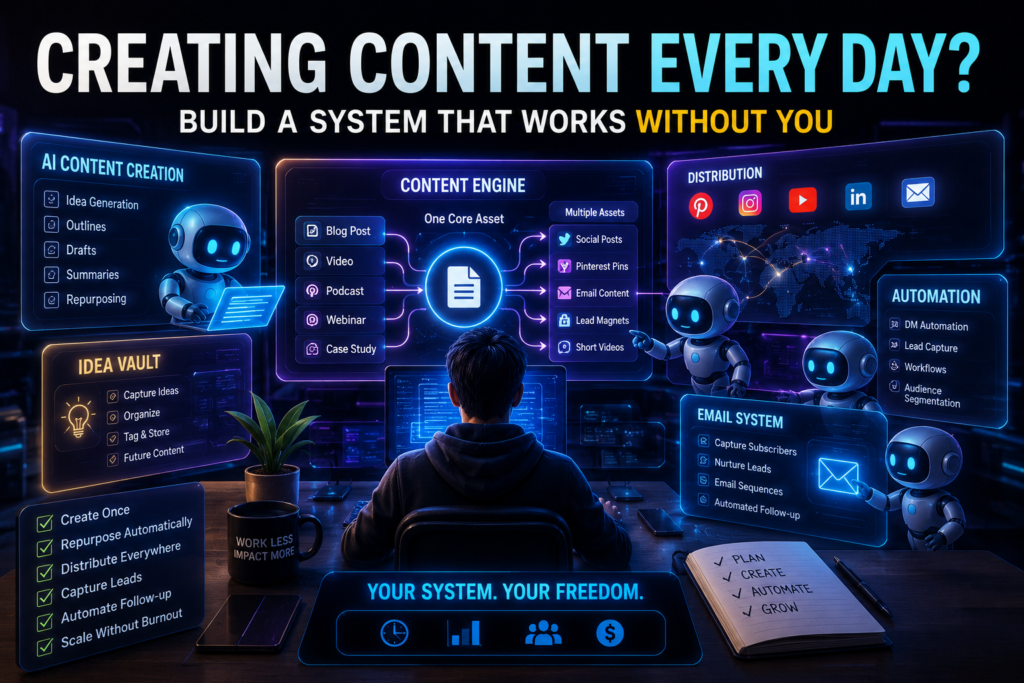
Creating content every day is a terrible business model.
If your blog, Pinterest account, newsletter, or YouTube channel stops growing the moment you stop working, you don’t have a content system—you have another job.
A scalable content engine is surprisingly simple:
- Create one valuable piece of content.
- Turn it into multiple assets.
- Distribute those assets across channels.
- Capture leads.
- Automate follow-up.
Everything else is optimization.
Start With One Core Asset
The easiest system starts with a single long-form asset every week.
That asset could be:
- a blog post
- a podcast episode
- a YouTube video
- a webinar
- a case study
The format doesn’t matter. What matters is creating something substantial enough to repurpose.
Once you have that foundation, content creation becomes far easier because you’re no longer feeding every platform separately.
Extract More Value From Every Recording
Castmagic
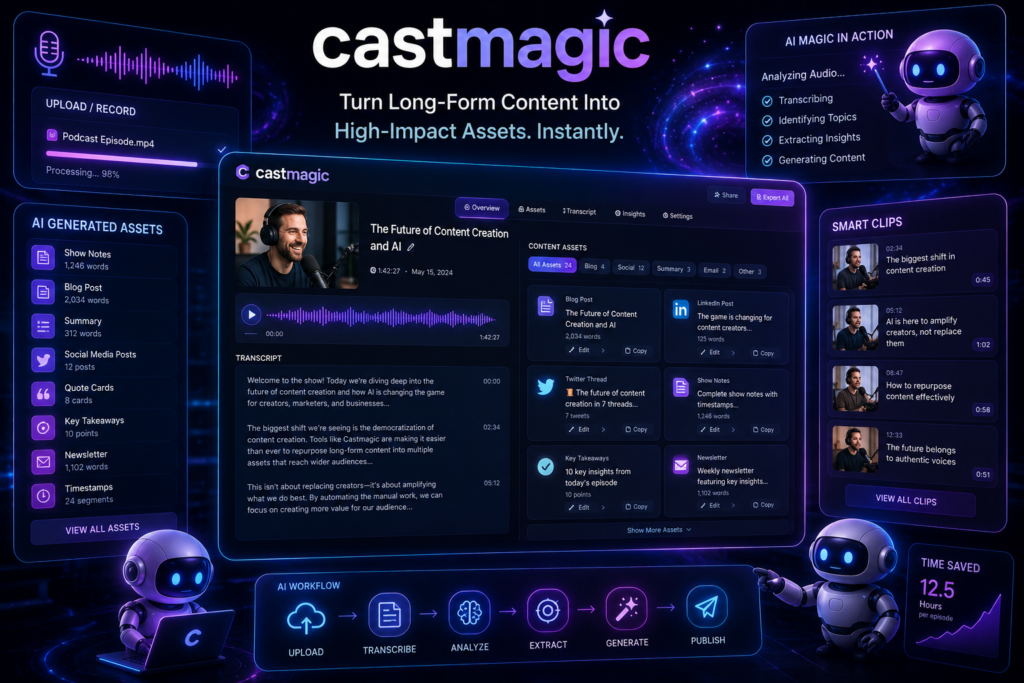
Many creators record valuable content and then leave most of it unused.
A podcast episode might contain ten content ideas, three newsletter topics, and twenty social media posts, but manually extracting all of that information can take longer than creating the original recording.
What problem does it solve?
It helps turn long-form audio and video into reusable content assets.
Who should use it?
- Podcasters
- YouTubers
- Coaches
- Educators
- Content creators
Where does it save time?
Content extraction, summaries, article drafts, social snippets, and content planning.
What’s the limitation?
The first draft is rarely the final draft. You’ll still need to edit outputs and adapt them to your audience.
The value comes from reducing repetitive work, not replacing human judgment.
Build an Idea Vault
One lesson that surprises newer creators is that ideas rarely appear during content sessions. They appear while solving problems. A client asks a question. You discover a useful workflow. You test a new tool. You make a mistake. Every one of those moments can become future content. The creators who seem to have endless ideas usually aren’t more creative. They’re simply better at capturing ideas before they disappear.
Organize Ideas Before They Become Content
Gamma
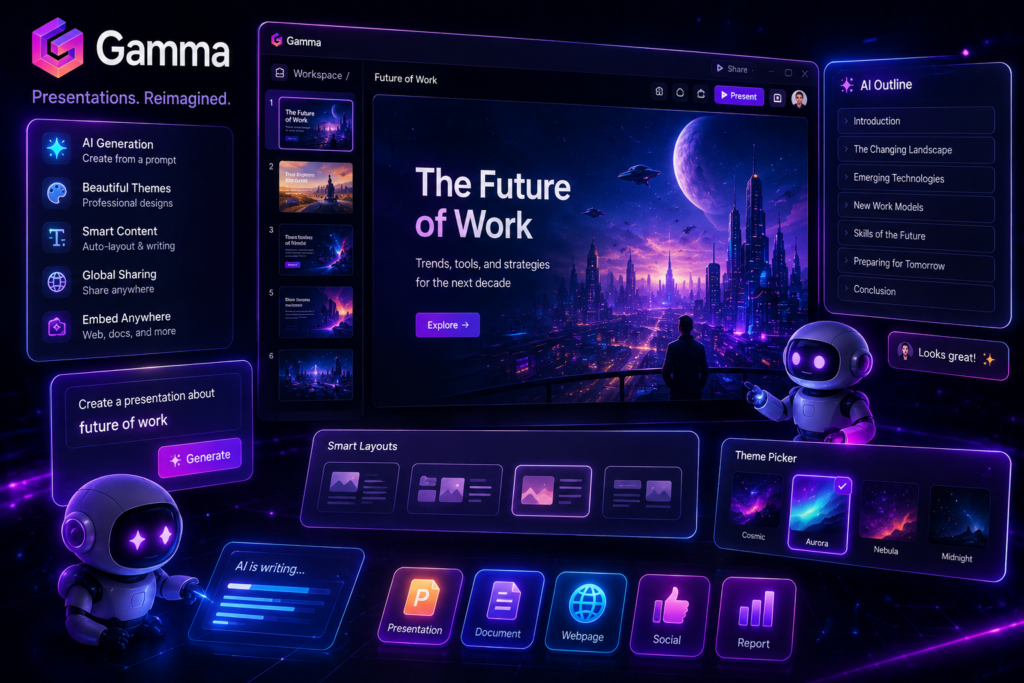
Once ideas start accumulating, organization becomes more important than generation.
What problem does it solve?
It helps structure information, frameworks, visual guides, and content plans without spending hours on formatting.
Who should use it?
- Content creators
- Marketers
- Consultants
- Course creators
- Small businesses
Where does it save time?
Presentations, lead magnets, visual documentation, content planning, and internal knowledge organization.
What’s the limitation?
Good structure doesn’t automatically create good content. The underlying ideas still matter far more than the presentation.
⚠️ Many creators spend too much time making content look professional before making it useful.
Distribution Matters More Than Most People Think
One of the strangest things about content marketing is that publishing often feels like finishing.
In reality, publishing is usually the beginning.
A strong article can produce:
- multiple Pinterest pins
- email content
- social media posts
- lead magnets
- future articles
The more places your content appears, the more opportunities it has to generate results. This doesn’t require creating more content. It requires extracting more value from existing content.
Automate The Repetitive Parts
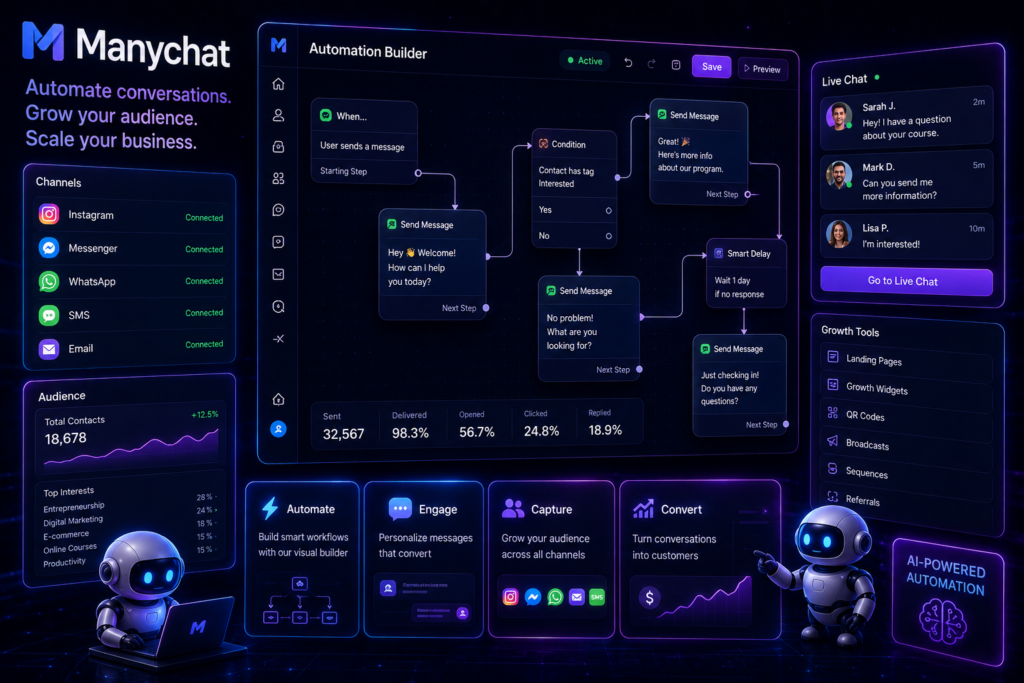
ManyChat
Audience growth sounds great until you realize that every new follower creates additional work. More people means more questions, more requests for resources, and more conversations that need follow-up. At a small scale this is manageable, but once your audience starts growing, manually handling every interaction quickly becomes one of the biggest drains on your time.
What problem does it solve?
ManyChat helps automate routine communication with your audience, making it easier to deliver resources, qualify leads, and respond to common requests without being glued to your inbox every day.
Who should use it?
- Instagram creators
- Ecommerce brands
- Coaches
- Service businesses
- Marketing-focused creators
Where does it save time?
DM automation, lead delivery, comment triggers, audience segmentation, and basic follow-up workflows.
What’s the limitation?
Automation works best when it supports genuine communication. Poorly designed workflows often feel cold and scripted, which can damage trust instead of building it. The goal is to remove repetitive tasks while still creating a good experience for real people.
Build Something You Actually Own
One mistake many creators make is assuming that social media growth automatically creates a stable business. It doesn’t. Platforms change, algorithms change, and traffic sources that seem reliable today can look very different a year from now.
That’s why experienced creators eventually focus on building assets they control directly. An email list is one of the best examples. Unlike followers on a platform, your email subscribers remain accessible regardless of what happens to an algorithm or recommendation system.
Social media is excellent for discovery.
Ownership is what creates long-term stability.
Turn Visitors Into Subscribers
GetResponse
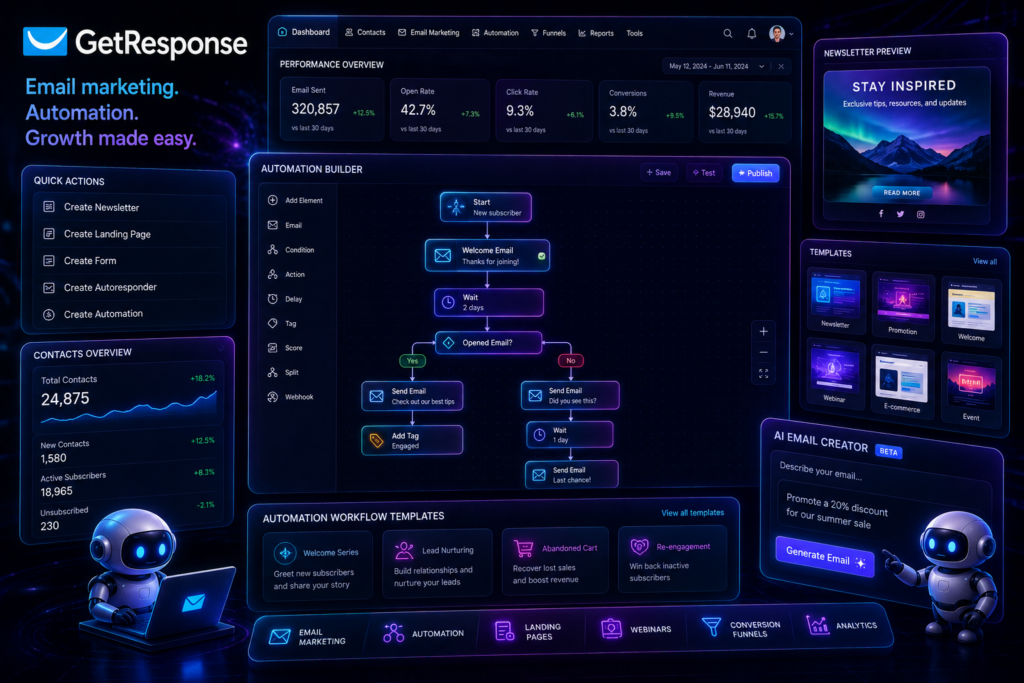
This is where email becomes important.
What problem does it solve?
Helping creators capture and nurture audiences outside social platforms.
Who should use it?
- Bloggers
- Affiliate marketers
- Newsletter creators
- Course sellers
- Small businesses
Where does it save time?
Email sequences, onboarding, lead nurturing, and automated communication.
What’s the limitation?
Email automation amplifies what already exists. If your content isn’t useful, no automation platform will solve that problem.
The Workflow Most Creators Actually Need
A simple content engine often looks like this:
- Publish one high-quality article or video.
- Extract supporting content from it.
- Store new ideas for future content.
- Create visual assets.
- Publish across multiple channels.
- Capture leads.
- Automate follow-up.
That’s enough.
Most creators don’t need a more complicated system.
They need a repeatable one.
Quick Audit
Ask yourself:
✅ Can one piece of content generate multiple assets?
✅ Do you have a system for storing future ideas?
✅ Are you building an email list?
✅ Can your content operation survive a week without you?
If not, that’s where your biggest opportunity probably sits right now.
Final Thoughts
The goal isn’t creating content every day. The goal is creating a system that keeps producing results every day. When one article becomes multiple assets, when distribution becomes routine, and when follow-up happens automatically, content stops feeling like an endless task list and starts behaving like a real business asset.